
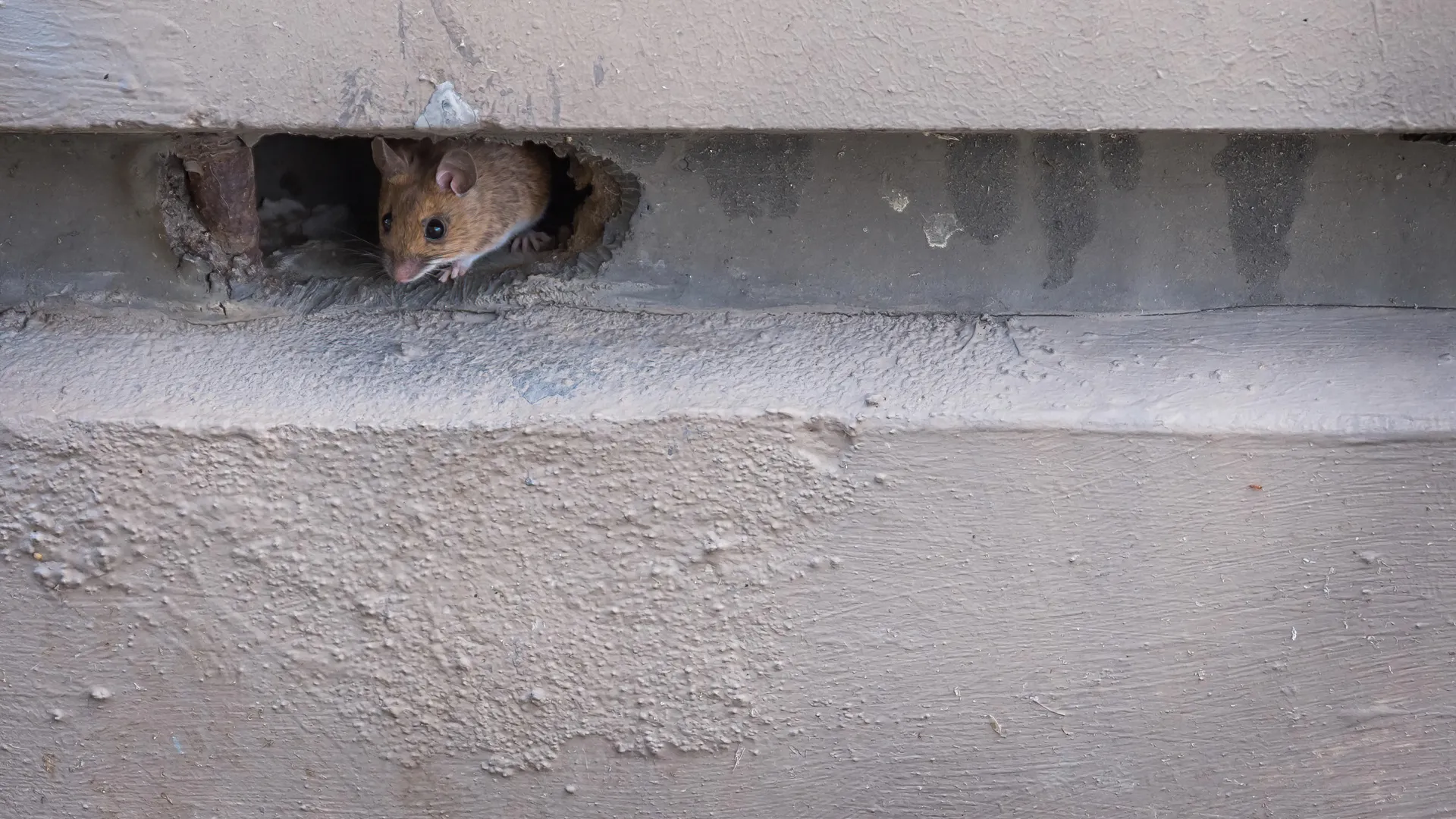
Mice usually end up in your walls because a wall cavity is warm, hidden, and close to food, and a gap somewhere on the outside of the house let them in. They climb well, so an opening a few feet off the ground is no barrier. The scratching you hear at night is them moving between the wall and the attic or basement. A few store traps rarely fix it, because the mice already inside keep getting replaced by new ones using the same gap. Getting them out for good takes finding how they're getting in and treating the activity until it stops.
You hear it after the house goes quiet. A faint scratching behind the drywall, somewhere near the baseboard or up by the ceiling, then nothing, then it starts again. Mice in your walls are one of the most common calls we get once Michigan nights start cooling off, and that sound is usually the first thing a homeowner notices. By the time you're hearing movement inside the wall, the mice have already found their way in and settled somewhere close to warmth and food.
What the Scratching Really Means
That scratching is not the house settling. Mice are active mostly at night, and a wall cavity gives them a protected route between the attic, the basement, and the rooms where food gets made. What you're hearing is movement along that route. If the sound runs up and down, they're using the space inside the wall to get between floors. If it's more of a scurry overhead, the activity has already reached the attic. A night or two of noise can mean a single mouse, but mice rarely stay single for long, and a quiet week doesn't mean they left. Usually it means they've settled into a nest.
How Mice Get Into Your Walls
Here's the part that surprises people: mice don't need a hole you'd ever notice. A house mouse fits through a gap about the width of a pencil, and yes, mice can climb walls, inside and out. Rough brick, siding, downspouts, even textured foundation concrete give them enough grip to reach an opening several feet up. Once they're on the wall, any of these is an easy door in:
- A gap where a pipe or cable passes through the exterior wall
- The rubber seal along the bottom of the garage door, once it wears down
- Look up: dryer vents and utility openings often sit uncovered
- Foundation cracks, plus the seams where siding meets brick
From there it's a short trip into the wall cavity, the hollow space behind your drywall, and they're out of sight.
Why Older Detroit Homes Are Targets
Detroit metro's housing stock skews older, and older houses give mice more of the small openings they're after. Settling foundations crack. Additions and remodels leave gaps where old meets new. Utility lines run decades ago were rarely sealed tight where they enter the house. None of it shows up on a normal home inspection, but on a cold October night it's exactly what a mouse is hunting for. If your home was built before the 1980s, assume the gaps around utility lines are wider than they look.
Why Traps Alone Fall Short
A few snap traps from the hardware store can catch the mice already inside. What they can't do is change why the mice came in. New ones keep finding the same opening once the weather turns, so you empty a trap on Monday and hear scratching again by the weekend. Store poison carries its own problem: a mouse can crawl back into the wall to die, and now you've traded scratching for a smell you can't reach. Getting rid of mice in walls means dealing with the activity and the entry points together, not one trap at a time.
How We Get Mice Out of the Walls
We start with an inspection, not a trap. Before anything gets placed, we walk the property to confirm what we're dealing with, because mouse droppings sit small and pointed, about the size of a grain of rice, while a rat leaves something closer to a raisin and travels higher in the structure. Getting the species right decides where the treatment goes.
From there, bait stations are the core of how we handle rodents, placed where the activity is heaviest and serviced on every visit. Here's what each visit covers:
- Bait stations placed and serviced where activity is heaviest
- A full inspection to pin down the species and find the entry points
- Snap and sticky traps back up the bait in the spots mice are using
- Before we leave, clear next steps for closing the gaps we found
We locate and note every entry point so you know exactly where the problem is coming from, and we keep coming back to check activity and adjust until it's genuinely gone, not until a set number of visits runs out. Our rodent control service is built around your specific house, and if you want the fuller picture, how our rodent control approach works breaks it down in more detail.
Fair Pricing, Backed by a Guarantee
Rodent control is priced upfront, either on its own if you've got an active problem right now, or built into RIDD Package 4, starting at $89 a month, which pairs quarterly pest visits with rodent monitoring and a seasonal mosquito barrier. Pricing is flat across the whole Detroit metro area, from Royal Oak to Oxford, with no travel fee and no zip code markup. Every plan carries our 100% satisfaction guarantee: if the scratching comes back between visits, so do we, at no extra charge. We won't sell you a cheap inspection that turns into a five-figure quote once you're invested, either. If we don't find an active problem, we'll tell you.
Ready to Stop the Scratching?
If you're lying awake listening to something move inside the wall tonight, it won't sort itself out before winter, and the cold only pushes more mice indoors. Call us at (833) 378-0537 or send a message, and we'll get one of our professionals out to inspect the property, usually within two to five business days.
We serve homeowners across the Detroit metro area, including:
- Westland
- Livonia
- Farmington Hills
- Royal Oak
- Warren
- Romeo
- Chesterfield
- Oxford
- Ortonville
- Fenton
- Parshallville
- Brighton
- Whitmore Lake
- Barton Hills
Don't see your city? Give us a call. We probably cover you too.