
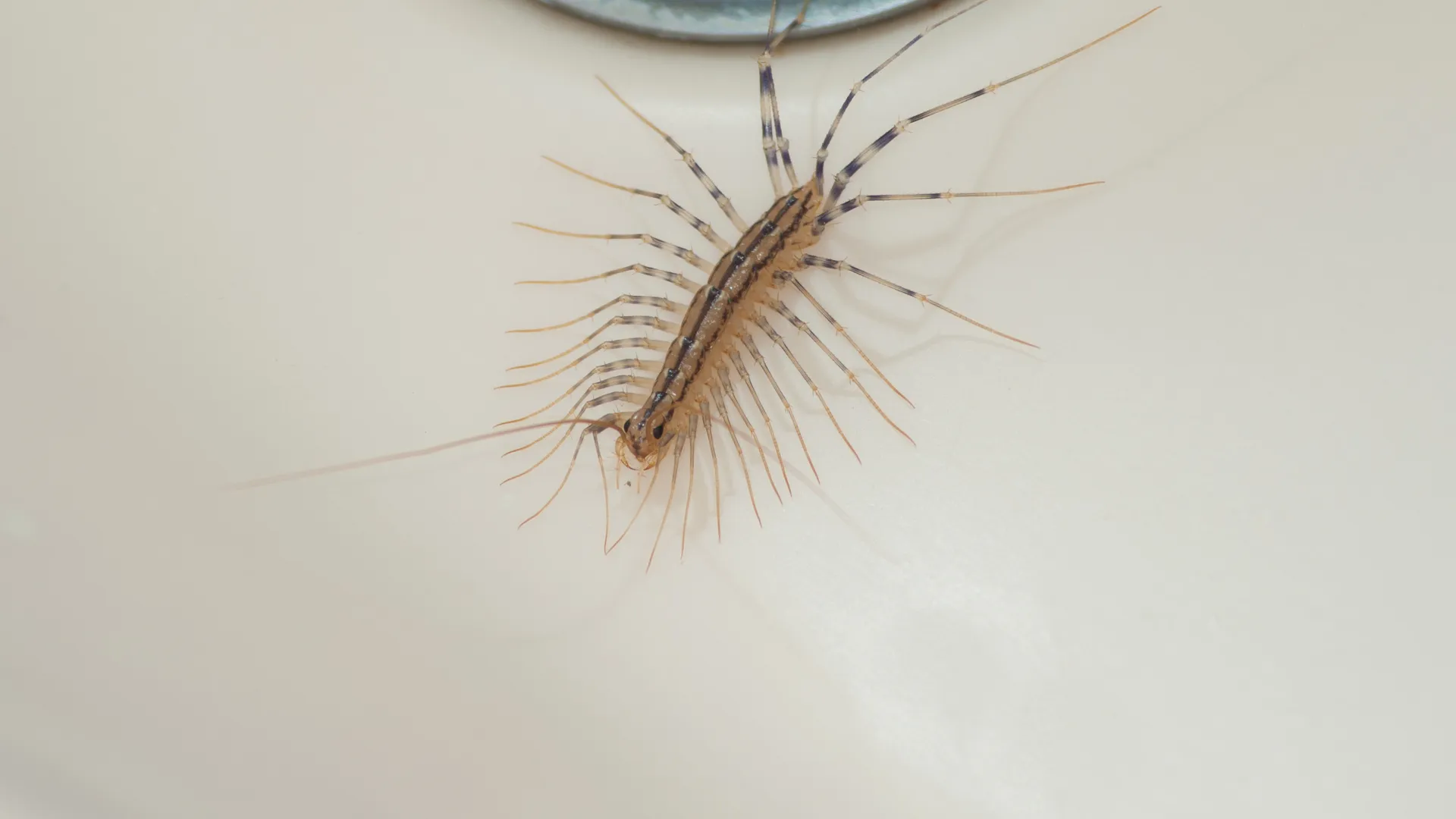
The fast one with all the legs is a house centipede, and the flat silver one that wriggles like a tiny fish is a silverfish. Neither one is dangerous to you, and neither showed up at random. Both need damp air to survive, so a basement that holds moisture is the one room in the house that suits them. House centipedes eat insects, so a steady supply of them usually means something else is living down there too. Clearing them out means drying the space and treating what they feed on, not just stepping on the ones you see.
You flip on the basement light, and something with an inch-and-a-half body and a fringe of long legs tears across the concrete and vanishes under the water heater before your brain finishes processing it. That is a house centipede, and the reaction it gets is out of proportion to the actual threat.
The other one people call us about looks nothing like it: a small, flat, silver insect that wriggles instead of runs, usually found in a floor drain or stuck in the laundry sink. Different pests, same underlying problem.
What Is Running Across the Floor
House centipedes have fifteen pairs of long legs and move so fast that people swear they were bigger than they were. They don't build nests, they don't damage anything, and while they can bite, their jaws rarely penetrate skin.
Silverfish are slower and far more secretive. Both are more active at night. A basement can seem fine all day and feel completely different at ten at night with the lights off.
Why Basements Suit Both of Them
Neither one holds onto moisture well, so it has to live somewhere the air stays damp, or it dries out and dies. A Michigan basement in October is close to perfect: cool, dark, and humid, especially after a wet fall. The concrete basement walls under most Detroit metro homes sit in clay soil that holds water against them long after the rain stops, and older walls let that moisture seep through to the inside. Add a laundry area and a floor drain that never fully dries, then stack boxes on the concrete, and the conditions are there whether the basement is finished or not.
Silverfish in the House Are a Water Sign
Finding silverfish in the house almost always points to moisture rather than food, though they will feed on paper and cardboard, and on the starch in wallpaper paste. A few spots to check before you do anything else:
- Cardboard boxes sitting directly on a basement floor
- Around the washer, where a slow drip from a hose goes unnoticed for months
- A bathroom fan that vents into the attic instead of outside
- Under the kitchen or laundry sink, where the cabinet floor stays damp
Stored paper on a damp concrete floor is one of the most common ones we find, and moving those boxes onto a shelf solves more than most people expect.
What Centipedes Are Eating Down There
House centipedes are predators. They are in your basement because it has things worth hunting, and that list starts with silverfish and small flies before it gets to whatever else is breeding in the damp corners.
A lot of centipedes usually means a lot of other insects in the house. Spiders operate on the same logic. They both turn up in the same basements for the same reason. We covered that in more detail in our post on why wolf spiders come indoors, and our spider control service addresses the same food-supply problem from the other direction.
How to Get Rid of House Centipedes
Treating the pests you can see is the smallest part of it. The real work is drying the space and cutting off their food supply. A single spray-and-leave visit rarely sticks because it does neither.
Getting the humidity under 50 percent makes the basement a bad place for them to live, and that means a working dehumidifier plus gutters that push water away from the base of the house. We fix whatever is dripping under the sink, too. Then we treat the insect population so the centipedes have nothing left to hunt. Do one without the other and they come back.
What Our Visits Cover
Our general pest control service treats the outside of your home on every visit, and we can treat the inside whenever you want. When we come in, basements get real attention rather than a pass along the stairs. A visit can include:
- Inside treatment where the floor meets the wall, around floor drains and behind stored items
- Outside treatment that includes the eaves and the roof overhang most companies skip
- Treatment around window wells, pipe openings, and gaps at the base of the house, with any openings pointed out to you
- A reminder before every visit
Our professional walks you through what was found before leaving, so you know which corner of the basement is causing it.
Pricing and Our Guarantee
Centipedes and silverfish are covered under our Pest 4 plan, four visits a year starting at $49 a month, and our Pest 6 plan, six visits a year starting at $69 a month for homes with heavier pressure.
Pricing is flat across the whole Detroit metro area, from Chesterfield to Brighton, with no travel fee and no zip code markup. Every plan carries our 100% satisfaction guarantee: if they turn up again between visits, we come back and re-treat at no extra charge. No conditions attached, and no upsell on the way out the door.
Ready to Take the Basement Back?
Damp fall weather is when basement activity picks up, and a basement that feels manageable in October is a lot harder to ignore by the time the laundry pile starts collecting silverfish. Call us at (833) 378-0537 or book a visit online; most new customers are on the schedule within two to five business days.
We serve homeowners across the Detroit metro area, including:
- Westland
- Livonia
- Farmington Hills
- Royal Oak
- Warren
- Romeo
- Chesterfield
- Oxford
- Ortonville
- Fenton
- Parshallville
- Brighton
- Whitmore Lake
- Barton Hills
Do not see your city? Give us a call. We probably cover you too.